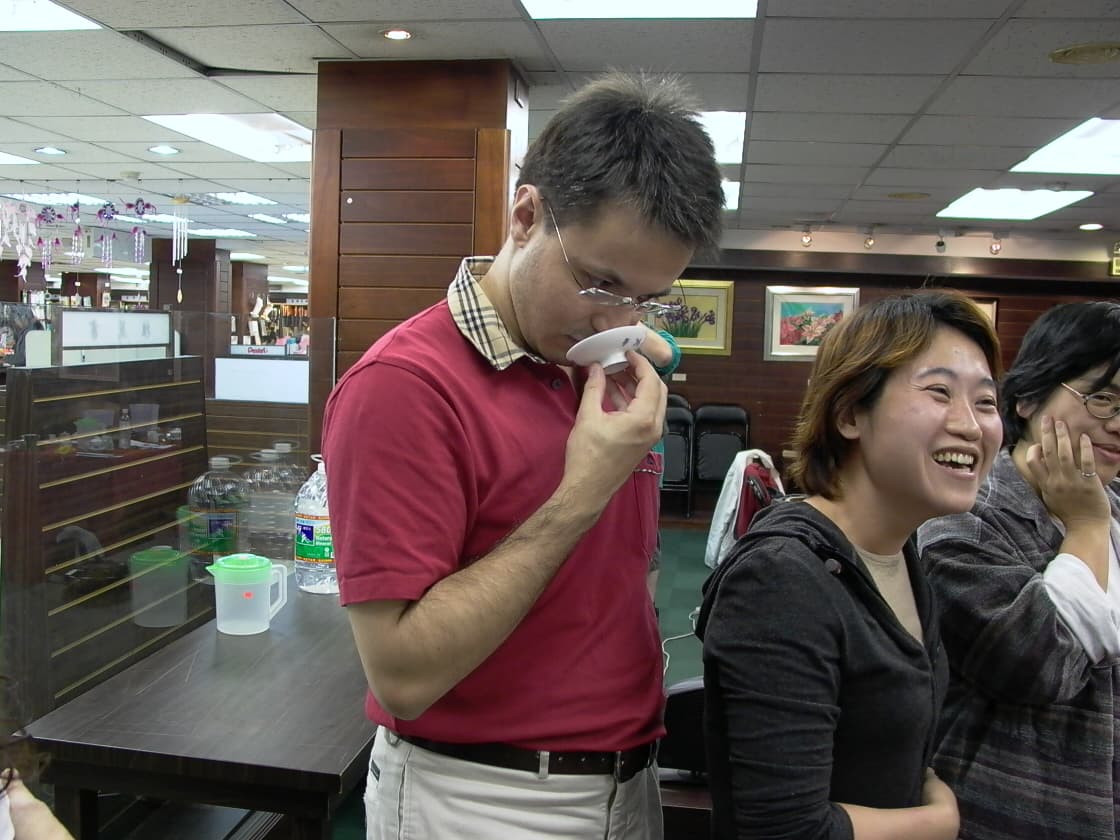
Walking into a tea house, you often see elaborate cup sets: a tall aroma cup (聞香杯 / wén xiāng bēi), a tasting cup, and tea being poured back and forth between them. Have you ever wondered: does tea drinking really need to be this complicated? Are aroma cups actually necessary? In truth, appreciating high mountain oolong's fragrance does require some thought about cup selection—but you don't necessarily need an aroma cup. The key is understanding the characteristics of different cups and choosing the method best suited to your tea.
The Aroma Cup Design: Tall and Cylindrical to Concentrate Scent
The market offers tall, cylindrical cups specifically designed to concentrate aroma—commonly called "aroma cups" or "sniffing cups." This cup style has genuine logic behind it: the columnar shape gathers aromatic compounds, making it easier for drinkers to appreciate the tea's fragrance.
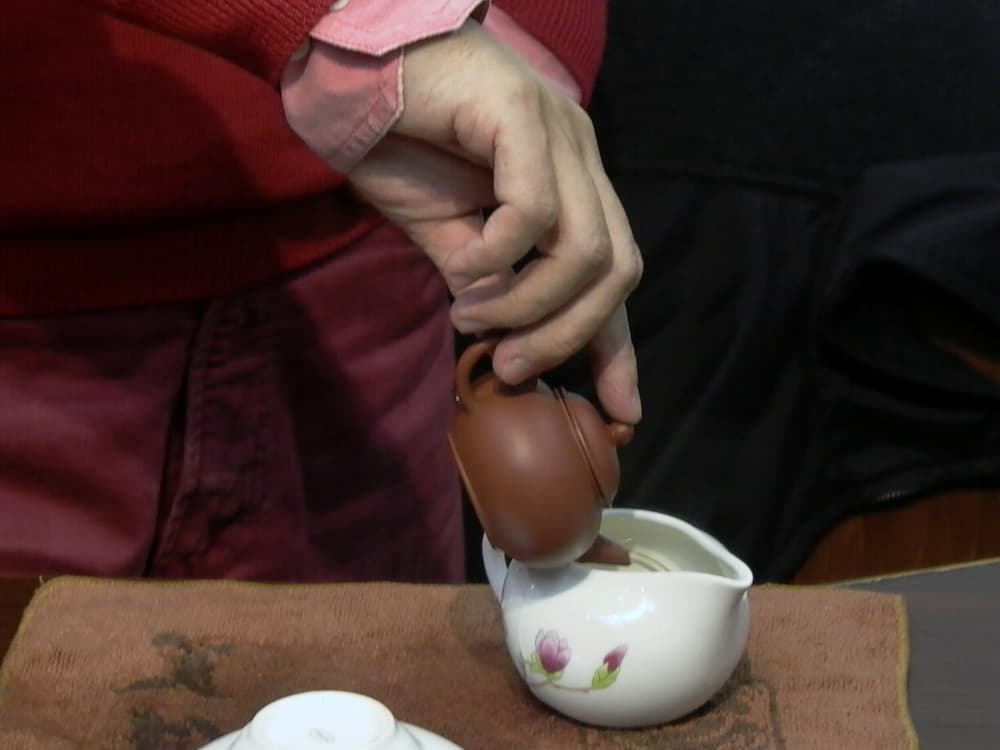
Aroma cups are typically paired with tasting cups in a set. The procedure: pour tea liquor into the aroma cup first, then transfer to the tasting cup, and finally lift the empty aroma cup to inhale the lingering fragrance. This process appears professional, but is it truly necessary?
The Problem with Aroma Cups: Tea Cools, Fragrance Fades
My experience suggests that with highly aromatic teas, it's best to drink while hot. When poured into an aroma cup, the tea often cools too much, actually losing its fresh fragrance rather than highlighting it.
This is the aroma cup's greatest drawback. High mountain oolong's aromatic character is elegant and delicate, best appreciated while the tea is still hot. By the time liquor travels from pot to aroma cup to tasting cup, the temperature has dropped significantly, and the originally bright, lifted aromatics have faded.
Therefore, tea poured directly from pot to cup—without this "transit stop" at the aroma cup—is often preferable. Maintaining optimal temperature allows the fragrance to express itself fully.
Porcelain Cups: The Best Choice for High Mountain Tea
Of course, if you want to appreciate high mountain oolong's aroma, cup selection still matters. Porcelain is the top choice. As mentioned earlier, porcelain doesn't absorb aromas—its smooth, non-porous surface presents the tea's fragrance in its purest form.
When selecting porcelain tasting cups, consider the rim design. A cup with a slightly flared rim allows aromatics to waft naturally toward your nose as you sip. This simple design feature can enhance your aromatic experience without the temperature loss of a separate aroma cup.
When Aroma Cups Do Make Sense
That said, aroma cups aren't entirely without merit. For certain heavily roasted oolongs where the fragrance remains robust even as temperature drops, the aroma cup ritual can add to the experience. Similarly, in formal tea presentations or competitions, the standardized aroma cup procedure ensures consistent evaluation across samples.
If you enjoy the ceremonial aspect of tea drinking, by all means use an aroma cup set. Just be aware that for delicate, high-fragrance teas, you may be trading some aromatic intensity for ritual.
A Simpler Alternative: The Gaiwan Method
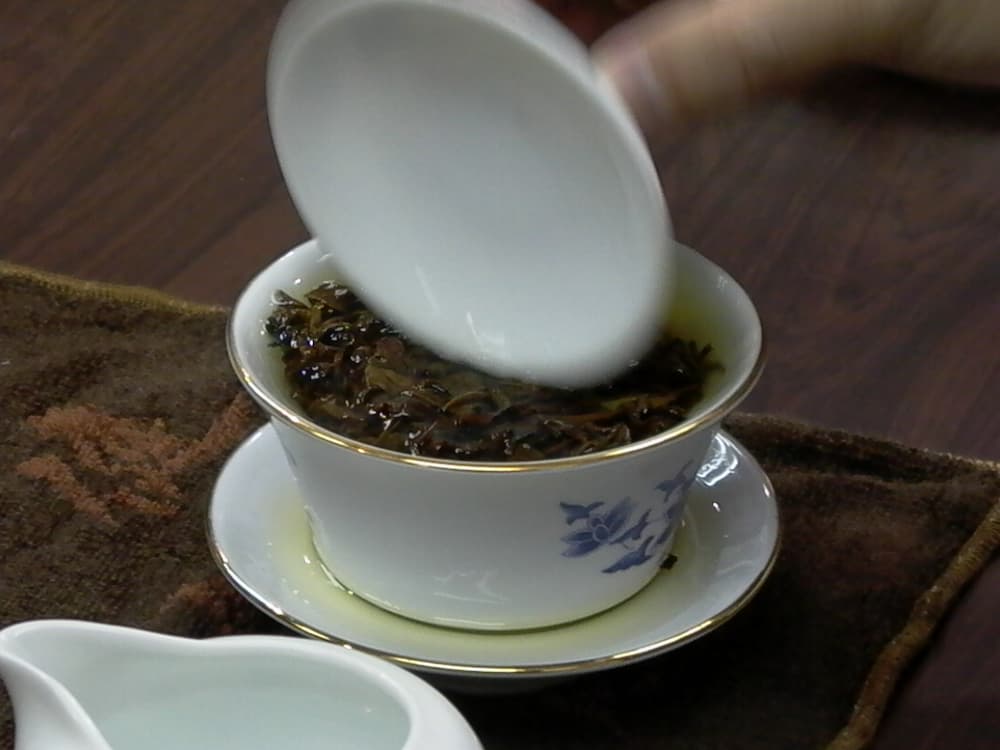
A gaiwan (蓋碗 / gài wǎn)—the lidded bowl used in Chinese tea brewing—offers an elegant middle ground. Brew your tea in the gaiwan, then smell the underside of the lid: this captures the rising aromatics beautifully. Pour into a simple tasting cup and drink while hot. You get both fragrance appreciation and optimal temperature without extra vessels.
Practical Recommendations
For everyday enjoyment of high mountain oolong, skip the aroma cup. Pour directly from your brewing vessel into a quality porcelain cup, and drink while the tea is still hot. If you wish to evaluate the fragrance more deliberately, use the gaiwan lid method or simply cup your hands around the tasting cup and inhale before sipping.
The goal is appreciating the tea, not performing a ceremony. Choose the approach that delivers the best sensory experience—for most high mountain oolongs, that means keeping things simple and hot.
[INTERNAL LINK: How to brew with a gaiwan]