
Have you ever wondered why some tea enthusiasts swear by Yixing clay teapots while others insist on porcelain? When you've spent good money on a package of high mountain oolong only to find the aroma disappointingly muted, the problem might not be the tea itself—you may have simply chosen the wrong vessel. High mountain oolong's defining characteristic is its fragrance, and extracting the tea's soluble compounds to reveal its true aroma depends largely on your choice of teaware.
The Right Tool for the Right Job
To truly appreciate high mountain oolong's fragrance, you must start with the proper brewing vessel. Many people mistakenly believe that any small teapot will deliver authentic flavor, but this isn't the case. High mountain oolong leaves are rolled into tight balls that need adequate space to unfurl fully—only then can you extract their true character.
Therefore, selecting a vessel with sufficient room for the leaves to expand completely is one of the keys to brewing excellent oolong. In terms of shape, round vessels work best, allowing the tightly rolled leaves to open up fully and evenly.
Want to know why porcelain is particularly well-suited for high mountain oolong? Let me walk you through the considerations of material, form, and practical application, so you can choose the right teaware and brew a cup bursting with fragrance.
Material Determines Aroma: The Advantages of Porcelain and Zhuni Clay
When it comes to material selection, porcelain teapots and zhuni (朱泥 / zhū ní) clay pots are most suitable for brewing high mountain oolong. Why? Because lightly oxidized teas contain elegant, delicate aromas. If you use a teapot made from porous, coarse clay, you may never experience the tea's true fragrance.
Porcelain has high density and doesn't absorb aromas, allowing it to preserve the tea's full fragrance—exactly what high mountain oolong requires. Zhuni clay, with its fine, dense texture, similarly locks in aroma without letting the tea's fragrance escape.
Why Taiwan's Competition Teas Are Always Judged in Porcelain
If you still doubt whether porcelain is truly superior for high mountain oolong, consider this: every tea competition in Taiwan uses standardized porcelain evaluation sets. This isn't arbitrary—competition organizers need vessels that won't influence or absorb any of the tea's characteristics, ensuring judges taste the pure, unaltered tea.
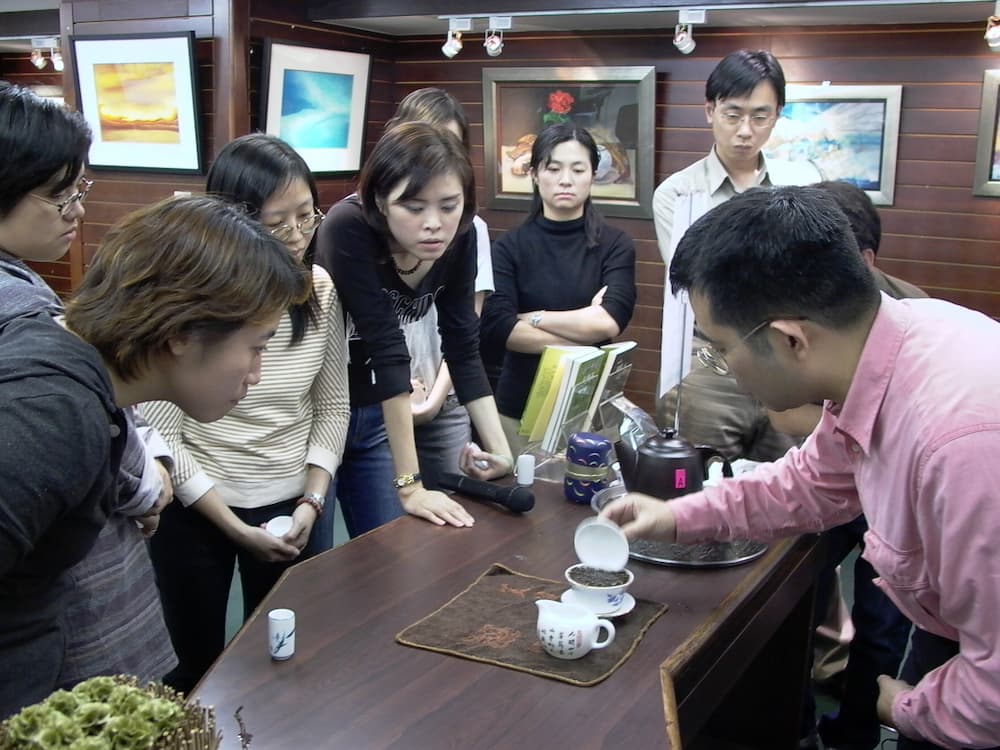
The standard competition set includes a lidded porcelain cup (蓋杯 / gài bēi) for brewing and a matching bowl for tasting. This setup allows judges to evaluate aroma from the lid while assessing liquor color and taste from the bowl—a system refined over decades specifically because porcelain's neutrality best reveals each tea's true nature.
What About Yixing Purple Clay?
Traditional Yixing purple clay (紫砂 / zǐshā) teapots have their place in tea culture, but they're better suited for heavily oxidized or roasted teas. The porous nature of purple clay actually benefits teas like aged oolong or shou puerh, where the pot's seasoning can enhance the brew over time.
However, for high mountain oolong—especially the light, floral varieties prized today—purple clay's porosity works against you. The material absorbs some of the delicate high notes, resulting in a flatter, less vibrant cup. Save your purple clay pot for teas that benefit from its mellowing effect.
Practical Brewing Tips
Once you've selected porcelain, here are a few additional tips for optimal results: preheat your vessel with hot water before adding tea leaves, use water just off the boil (around 90-95°C), and don't overcrowd the pot—leave enough room for the leaves to expand to roughly three times their dry volume.
With the right vessel and technique, you'll finally taste what all the fuss is about. That ethereal orchid fragrance and buttery sweetness that define premium high mountain oolong? They've been there all along—you just needed the right teaware to set them free.
[INTERNAL LINK: Complete guide to gongfu tea brewing]
