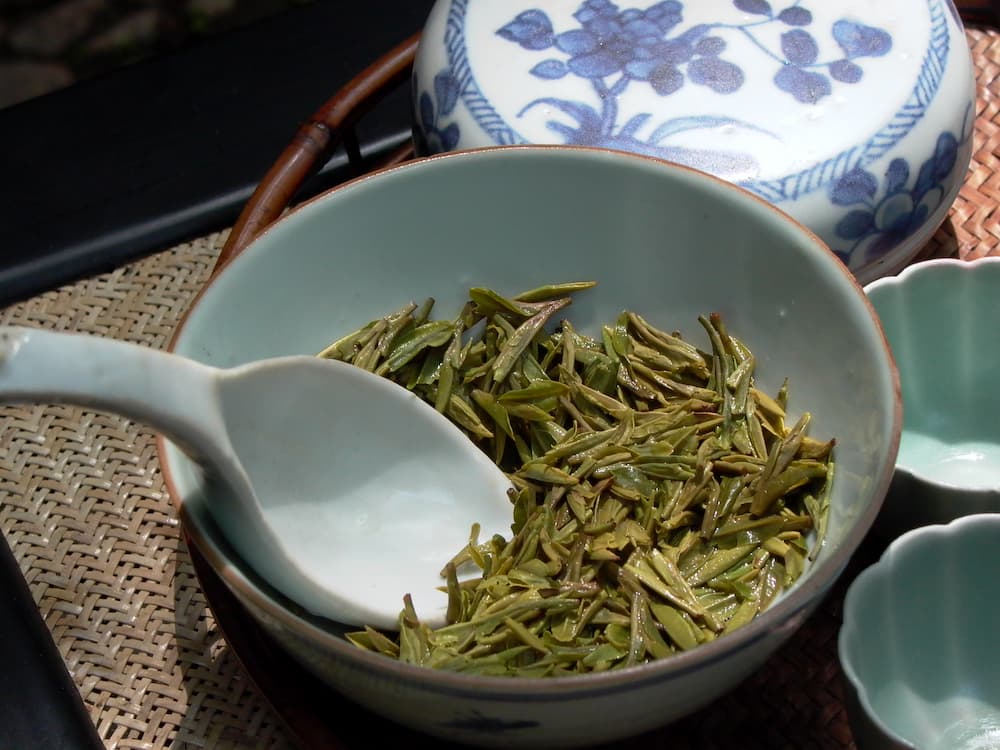
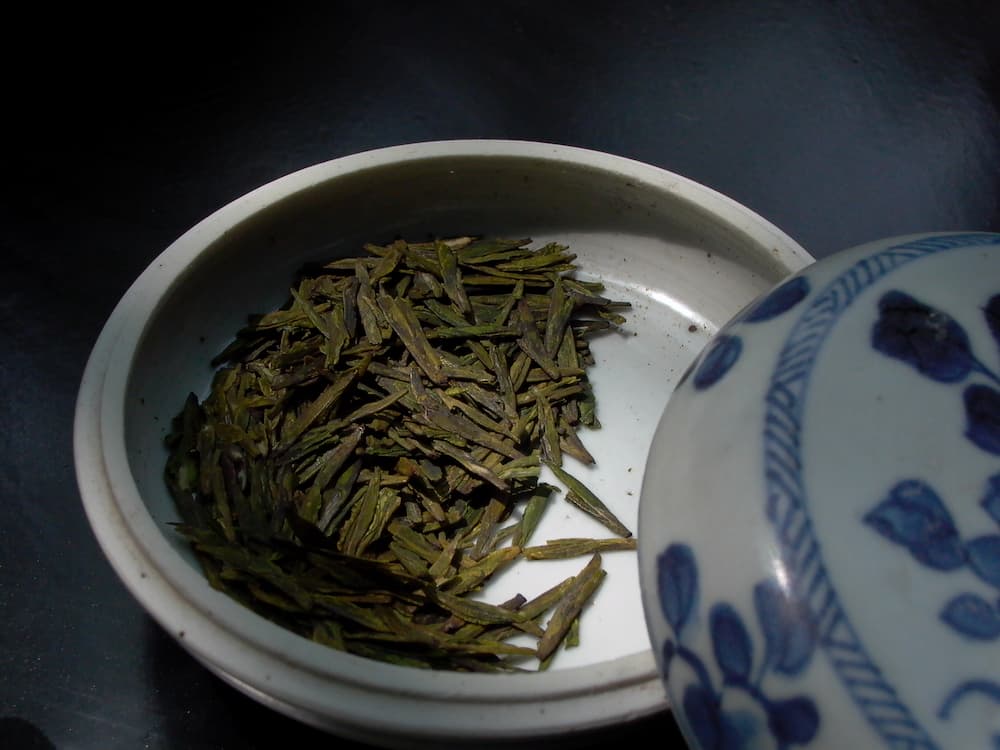
When someone asks "What type of tea is Longjing?", the simple answer is: Longjing (龍井 / lóngjǐng), or Dragon Well, is a green tea (綠茶 / lǜ chá). But this straightforward classification opens the door to understanding how Chinese teas are organized—a system based not on where tea grows, but on how it's processed.
The Six Categories of Chinese Tea
Chinese tea classification divides all teas into six categories based primarily on oxidation level and processing method:
Green Tea (綠茶 / lǜ chá) – Unoxidized tea. Leaves are quickly heated after harvest to halt oxidation, preserving their fresh, vegetal character. Longjing belongs here.
White Tea (白茶 / bái chá) – Minimally processed tea with slight natural oxidation. Leaves are withered and dried with minimal manipulation.
Yellow Tea (黃茶 / huáng chá) – Similar to green tea but with an additional "smothering" step that creates a mellower flavor and slight yellowing.
Oolong Tea (烏龍茶 / wūlóng chá) – Partially oxidized, ranging from 15% to 85% oxidation. Taiwan high mountain oolong falls here.
Red Tea (紅茶 / hóng chá) – Fully oxidized tea. Called "black tea" in Western terminology.
Dark Tea (黑茶 / hēi chá) – Post-fermented tea that undergoes microbial fermentation. Puerh is the most famous example.
Why Longjing Is Green Tea
Longjing's classification as green tea stems from its processing: freshly picked leaves are immediately pan-fired (殺青 / shā qīng) to deactivate the enzymes that would cause oxidation. This preserves the leaves' bright green color and fresh, grassy-sweet flavor profile.
The pan-firing technique for Longjing is distinctive—leaves are pressed flat against the hot pan using specific hand movements, creating the tea's characteristic flat, spear-like shape. But despite this unique processing style, the fundamental category remains green tea because oxidation is prevented.
Green Tea vs. Oolong: The Key Difference
Understanding Longjing as green tea helps clarify how it differs from oolong. Where green tea halts oxidation immediately, oolong deliberately allows partial oxidation before firing. This controlled oxidation develops the complex floral, fruity, and roasted notes characteristic of oolong.
A Taiwan high mountain oolong might be 20-30% oxidized—enough to develop those signature orchid fragrances while retaining freshness. A traditional Dong Ding might reach 40-50% oxidation, creating deeper, richer flavors. But Longjing, at essentially 0% oxidation, expresses the pure, unaltered essence of the fresh leaf.
Flavor Implications
Because Longjing undergoes no oxidation, its flavor profile is fundamentally different from oolong:
- Aroma: Fresh, vegetal, often described as chestnut or fresh-cut grass
- Taste: Sweet, delicate, with umami notes and no astringency when brewed properly
- Color: Pale green to light yellow liquor
- Body: Light and clean rather than rich and complex
These characteristics emerge precisely because the leaf has been preserved rather than transformed through oxidation.
Brewing Differences
The green tea classification also dictates brewing approach. Unlike oolong, which handles high temperatures well, Longjing requires cooler water (around 80°C) to avoid scorching the delicate leaves. Steeping times are shorter, and the leaves typically offer 2-3 good infusions rather than oolong's 5-8+.
Appreciating Both Styles
Understanding tea categories isn't about ranking—green tea isn't better or worse than oolong, just different. Longjing represents the pinnacle of green tea craftsmanship, while Taiwan high mountain oolong represents excellence in the oolong tradition. A well-rounded tea appreciation includes both, recognizing what each style does uniquely well.
[INTERNAL LINK: The six categories of Chinese tea explained]