
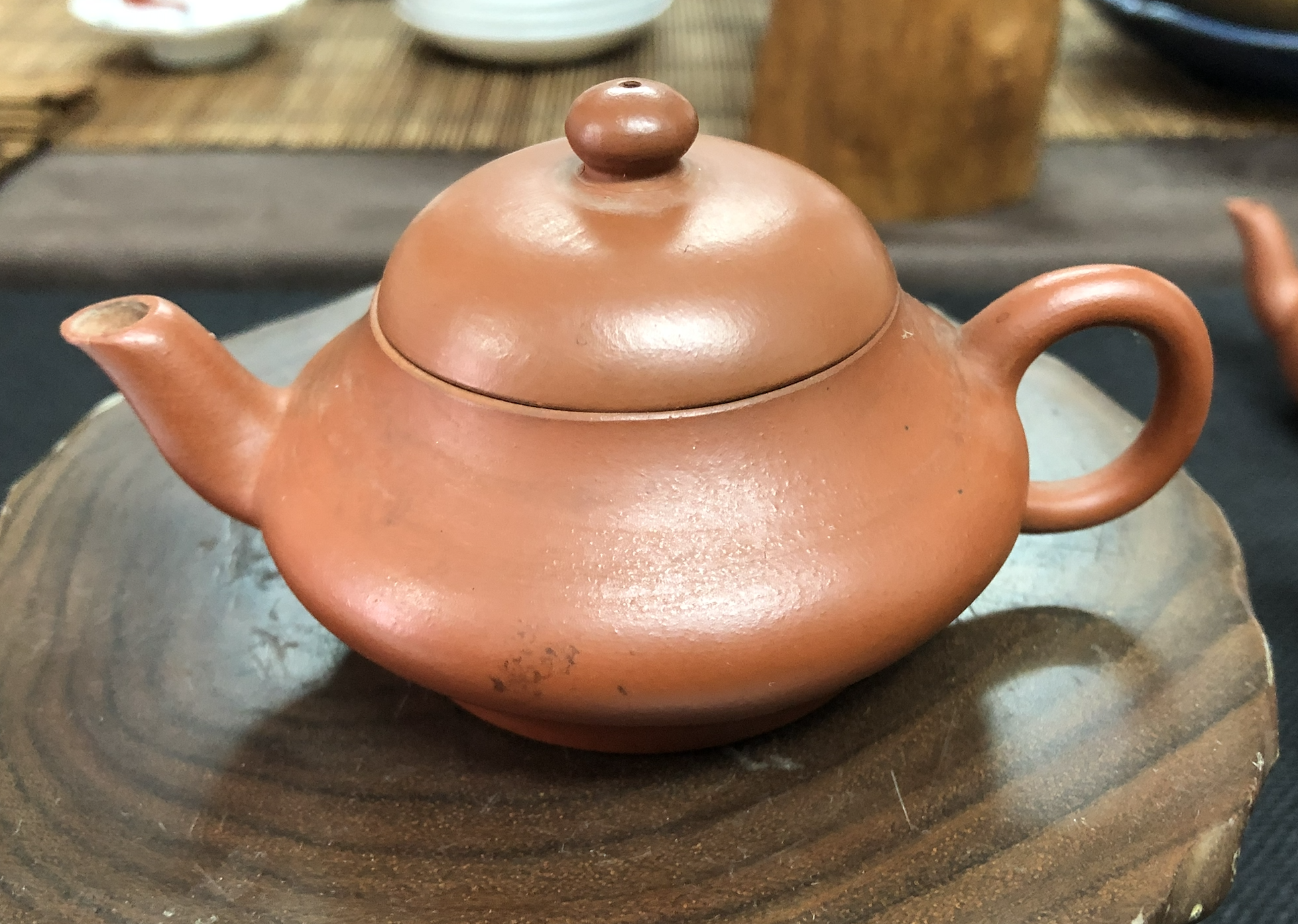
In the world of Yixing teapots (宜興紫砂壺 / Yíxīng Zǐshā Hú), one design principle stands above all others: the "three-point golden ratio" (三點金 / sāndiǎn jīn). This engineering standard requires that the spout tip, pot rim, and handle top form a perfectly horizontal line. But why does this alignment matter so much?
The Three-Point Principle Explained
The three-point golden ratio isn't merely aesthetic—it's functional engineering. When these three points align horizontally, the teapot achieves optimal balance and pouring control. A pot that violates this principle will either drip during pouring or require awkward wrist angles to pour cleanly.
Master potters (壺師 / hú shī) test alignment by filling the pot with water and observing the pour. A properly aligned pot produces a smooth, controllable stream that stops cleanly when the pot returns to level. Misaligned pots dribble, splash, or pour unevenly.
The Physics Behind the Design
The alignment creates a natural "water lock" effect. When the pot sits level, water cannot escape the spout because the water level in the body sits below the spout opening. During pouring, tilting the pot allows water to flow in a controlled arc determined by the spout's curve and the pot's center of gravity.
If the spout sits too high, you must tilt excessively to start the pour—losing control. If too low, water dribbles out even when the pot is level. The three-point alignment solves both problems.
Craftsmanship Challenges
Achieving perfect three-point alignment requires exceptional skill. Clay shrinks during firing—often unevenly. A spout that looks perfectly aligned before firing may droop or rise after kiln treatment. Master potters learn to anticipate and compensate for these changes.
Handle attachment presents similar challenges. The handle must be positioned to balance the pot's weight when full, not just when empty. This requires calculating water weight distribution and adjusting accordingly.
Evaluating Teapot Quality
When selecting a teapot, the three-point test provides immediate quality assessment. Place the pot on a level surface and sight across the three points. Perfect alignment indicates skilled craftsmanship; visible deviation suggests either amateur work or factory production without individual attention.
However, slight variations in antique or highly artistic pots may be acceptable—or even prized—as evidence of handmade character. The standard applies most strictly to traditional utility-focused designs.
Conclusion
The three-point golden ratio represents centuries of accumulated teapot engineering wisdom. What appears as a simple design rule actually encodes complex physics, material science, and ergonomic understanding. Next time you admire a fine Yixing teapot, check its alignment—you're seeing craftsmanship that balances art with engineering precision.
